Why does PMI measure harmful chemicals in our smoke-free products and what chemicals are measured?
How does PMI choose what HPHCs to measure?
Cigarette smoke is produced when the tobacco in a cigarette burns at temperatures in excess of 600 °C. At such high temperatures, the tobacco generates smoke that contains thousands of chemicals, including HPHCs, which have been recognized by public health authorities to be the most likely causes of smoking-related diseases.
In contrast, THS heats tobacco without burning it to generate a nicotine-containing aerosol. PMI conducts aerosol studies to confirm the absence of combustion processes and to demonstrate that the absence of combustion results in the emission of significantly lower levels of HPHCs.
Smoke constituent reporting and brand-by-brand disclosure is required by different regulatory authorities, either on an annual basis (e.g., Health Canada, and the authorities of British Columbia, Brazil, and Taiwan) or as a one-off disclosure (e.g., Massachusetts Department of Health, and the authorities of the U.K. and Australia). However, with the exception of Health Canada, specific methods for testing and comparing levels of toxicants in cigarette smoke and THS have not been defined or mandated. Instead, various priority lists of toxicants have been proposed for the evaluation of commercially marketed cigarettes.
In 2007, the World Health Organization (WHO) Study Group on Tobacco Product Regulation (TobReg) developed a list of nine priority toxicants (WHO 9) proposed for mandated lowering in cigarette smoke, with levels to be measured using the Health Canada Intense (HCI) machine-smoking protocol.
This was followed by the development of other priority lists. For example, in 2012, the U.S. Food and Drug Administration (FDA) established a list of 93 HPHCs (FDA 93) found in tobacco products and tobacco smoke.
HPHC priority lists such as the FDA 93 have become central in assessing claims of reduced toxicants emissions made by manufacturers of smoke-free products. However, priority lists and regulatory requirements change over time so, to ensure consistent reporting, PMI also developed its own list (PMI 58) for use in evaluation of heated tobacco products (HTPs).
The PMI 58 list includes HPHCs which are representative of the major toxicologically relevant chemical classes of compounds present in both the particulate phase and gas/vapor phase of cigarette smoke and that are applicable for the analysis of smoke-free aerosols.
All HPHCs on the PMI 58 list are required for reporting by different regulatory authorities, including all smoke constituents identified as priority toxicants and proposed for reporting by TobReg, and compounds which have been classified as either known or probable human carcinogens by the International Agency for Research on Cancer (IARC). Further additional HPHCs identified in mainstream cigarette smoke were considered and, if deemed relevant, added to the PMI 58 list of constituents requiring measurement for product evaluation.
A PMI study conducted in 2016 quantified these 58 compounds (plus nicotine) in the aerosol emitted by THS 2.2. Overall, the reduction in the levels of HPHCs in THS aerosol, compared with smoke from a reference cigarette, was greater than 90%. This result was confirmed in a subsequent study in which the average reduction in HPHCs in THS aerosol compared to smoke from a reference cigarette was 92%.
The full PMI 58 list is presented in the table below, which also includes comparison to various lists of priority smoke constituents proposed by the WHO, Health Canada, and the FDA.
How does PMI measure HPHCs in THS aerosol?
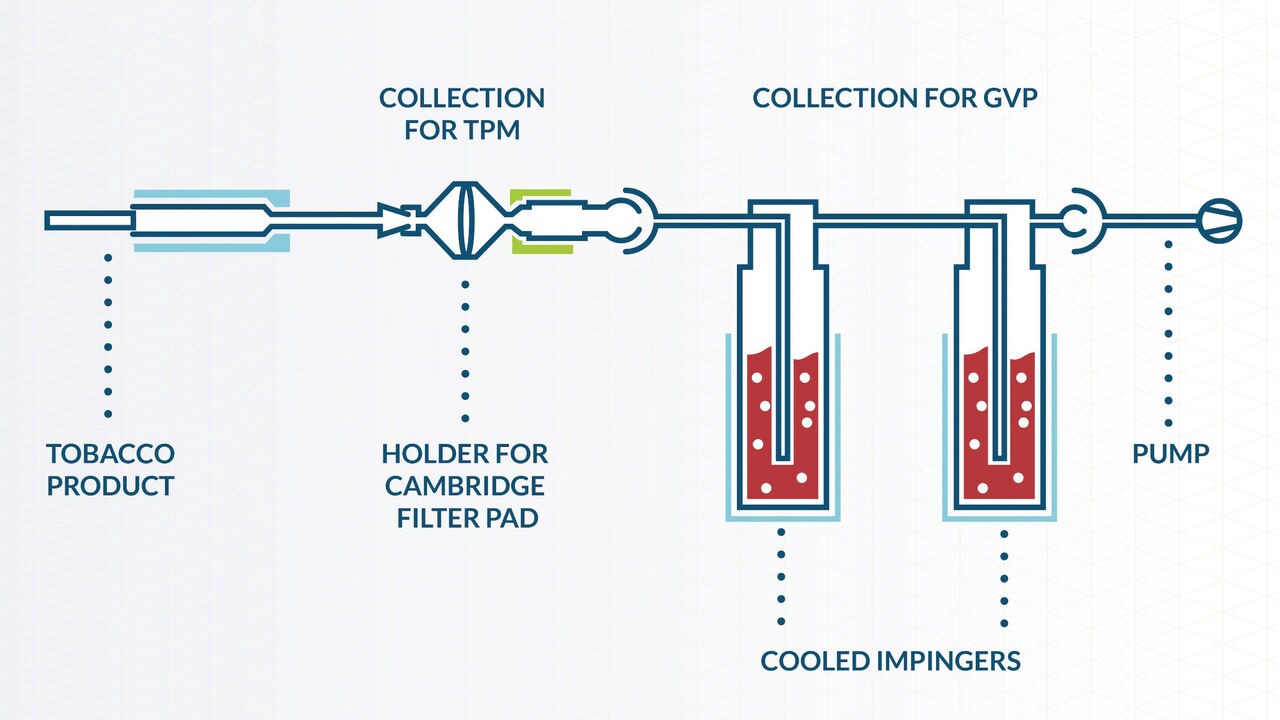
Aerosol produced by THS is collected and tested using different methods from those used with cigarette smoke, because the THS aerosol is fundamentally different from cigarette smoke. For example, it contains about 80% water and no solid particles, whereas cigarette smoke contains only about 10% water and billions of carbon-based solid particles.
Because of the differences between cigarette smoke and THS aerosol, some of the standard methods used to assess cigarettes cannot be applied to THS and do not produce accurate measurements of certain aerosol constituents without modification.
You can find the full methodology and protocols related to our assessment of THS aerosol in our publications library, including a detailed description of these modifications and step-by-step instructions for collecting the aerosol of THS using a commercial linear smoking machine.
Results of our measurements for THS aerosol versus cigarette smoke
Levels of HPHCs on the PMI 58 list have been measured for THS 2.2 (commercialized as IQOS 3 or IQOS Originals in certain markets) and THS 3.0 (commercialized as IQOS ILUMA in markets where it is available). All aerosol and smoke collections were performed according to the Health Canada Intense machine-smoking protocol. The analyses were conducted by Labstat International ULC, an independent International Organization for Standardization (ISO) 17025 accredited laboratory located in Kitchener, Ontario, Canada.
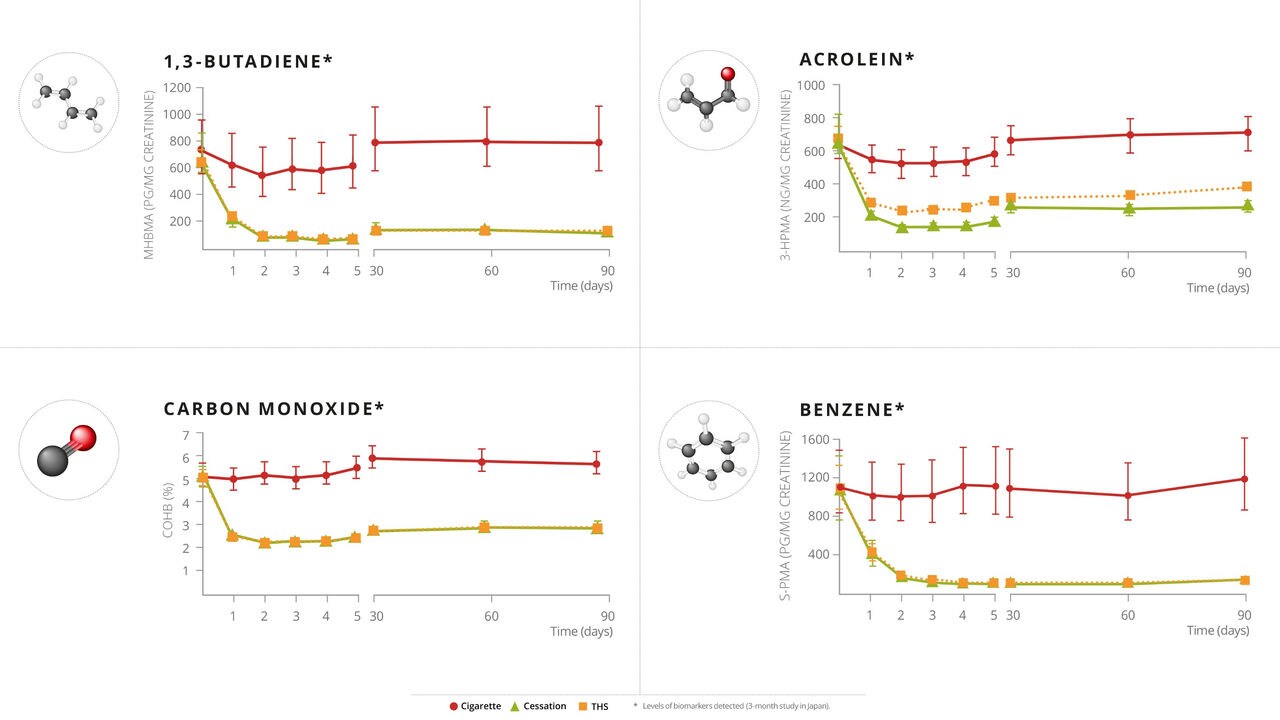
The results show that, in the laboratory, the levels of HPHCs in both the THS 2.2 and THS 3.0 aerosols were reduced by 90-95%, on average, relative to those found in the smoke of a reference cigarette.
Additional analysis* has also been conducted comparing levels of 108 HPHCs in aerosols emitted by THS 2.2 Regular and Menthol to levels of the same HPHCs found in the smoke of a reference cigarette. The 108 HPHCs examined in the analysis included all of the HPHCs on the FDA 93 list, as well as an additional 15 toxicants.
Of the 108 analytes, 105 were either below levels of quantification or were more than 45% reduced in THS aerosol relative to cigarette smoke. Among these 105 HPHCs, the average reduction was greater than 91%. The analysis also found that reductions for the THS regular versus menthol were similar (an average of >91.6% and >92.2%, respectively), indicating that the reduction in levels of HPHCs is not impacted by the nature of the flavor system.
*Data has not yet been published in a peer-reviewed journal.
Additional aerosol studies conducted using untargeted analysis have found that only a minority of the chemical constituents found in THS aerosol are present at concentrations exceeding those found in cigarette smoke.
Are the reductions in chemicals emitted by THS an indicator of a reduction in harm?
These results detailed here are a key part of the overall scientific assessment of our THS products, indicating that THS aerosol may represent a reduced risk of harm, compared with cigarettes, for adults who smoke and do not quit.
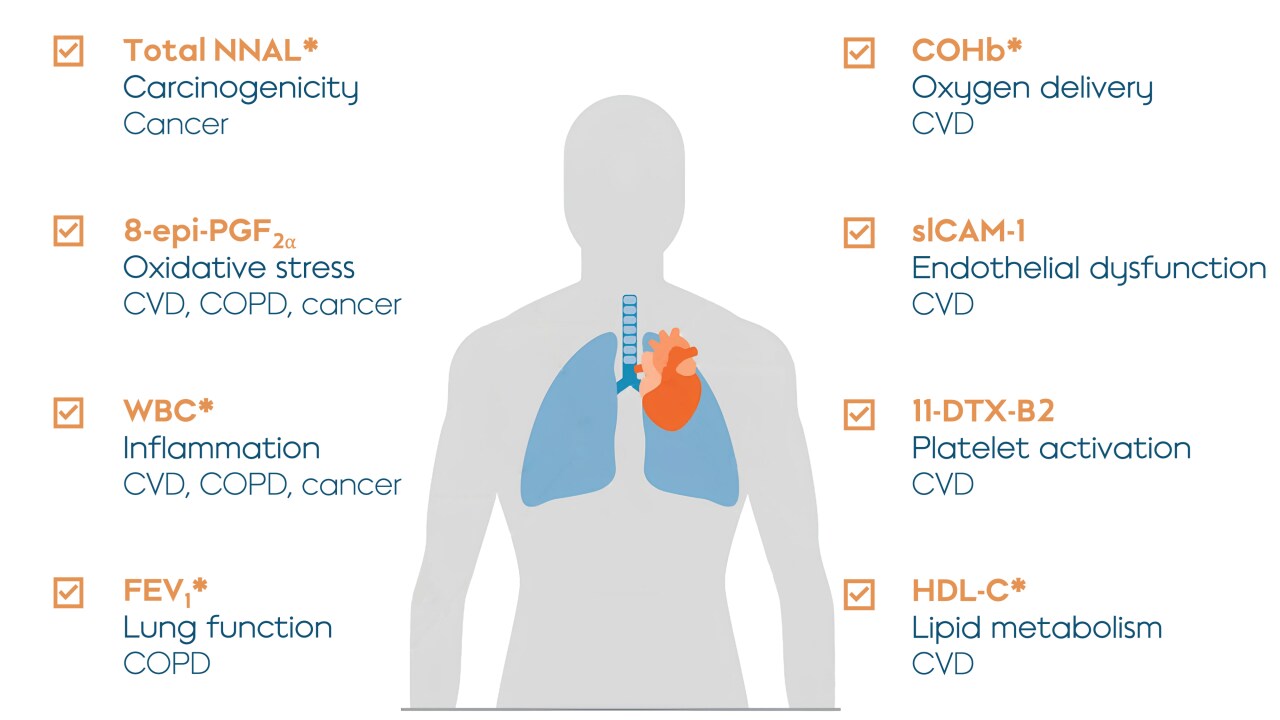
It is also important to remember that, while a reduction in HPHCs emissions can be an indicator of reduced toxicity as compared with cigarette smoke, it does not alone prove harm reduction.
This is why PMI conducts a complete assessment program to confirm the reduction in harm through further studies such as toxicological assessments, product use studies, clinical trials, and long-term assessments. For more information, you will find all the scientific studies across our assessment program in our publications library.